
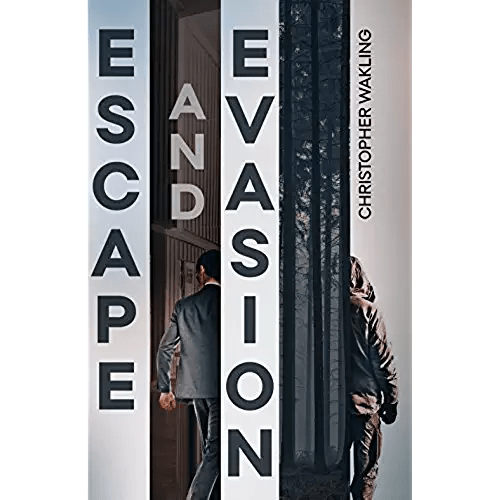
I’m excited to be on the blog tour today for Escape And Evasion by Christopher Wakling and to be able to share a Q&A with the author.
Escape and Evasion will be published on the 3rd May 2018 and you can pre-order your copy here.
Before I share the Q&A with you here is a little about the book.
Book Blurb:
Escape and Evasion reads like a Network for the Bitcoin era.’ Tony Parsons
City banker Joseph Ashcroft has stolen £1.34 billion from his own bank.
He has given it – untraceably – to impoverished strangers worldwide, and has fled.
Why has he done this? And will he get away with it?
Joseph knows that if he leaves the country, he will easily be tracked down. So he opts for hiding close by – first in the city, then in the woods near the home of his estranged family. An ex-soldier, he’s adept at the art of camouflage.
On Joseph’s trail is Ben Lancaster, the bank’s head of security and, as it happens, a former army friend with whom he shares a violent, guilt-ridden past.
The hunt is on.
Escape and Evasion is a tragicomic tale of buried secrets, the lengths a man will go to win back those he loves, and the fallout from a monumental change of heart.
Q&A with Christopher Wakling:
1. Can you tell us a little bit about yourself?
ESCAPE AND EVASION is my seventh novel. I used to work in the City, where the book begins. I was a lawyer; men like the book’s banker ‘hero’, Joseph Ashcroft, were my clients. I left that job to write my first novel, in Australia, where I also learned to surf (badly) and fly a plane (better, but still). I started out writing travel journalism in Australia, too.
2. What do you do when you are not writing?
I like mountain biking. There are lots of good trails where I live – Bristol – and I head out on them to clear my head. I also like being with my children, who are lovely the whole time, except when they’re not, and that takes up time, too. I spend a fair bit of time reading, as well.
3. Do you have a day job as well?
No. Since I stopped working as a lawyer I’ve either written fiction full time or combined it with other writing-related work. At the moment I’m running a six month novel writing course for Curtis Brown Creative. I’ve taught elsewhere, and, as I say, I write travel journalism from time to time as well.
4. When did you first start writing and when did you finish your first book?
I first started writing as a child. Mostly I wrote diaries detailing exactly what I ate and when I went to bed. They’re fascinating documents. In adolescence I graduated to mawkish poetry. I started writing fiction and travel articles at university, where I studied English. The further I got into my career as a lawyer the more badly I wanted to spend my time writing. I finished my first novel in 2002.
5. How did you choose the genre you write in?
I didn’t. I was surprised when that first novel was described back to me as a ‘literary thriller’. I just tried to write a story about something that mattered to me, careful to make sure the themes it explored were wrapped up in a story that would keep the reader turning the pages. I’ve written historical fiction, comic fiction, and thrillers (apparently). There’s a bit of all of that in ESCAPE AND EVASION.
6. Where do you get your ideas?
There’s this great shop round the corner…
7. Do you ever experience writer’s block?
Sometimes writing is hard and sometimes its less hard, but it never, in my experience, just arrives on the page. The term ‘writer’s block’ annoys me. It suggests it’s okay to give up. ‘I’ll be back when the muse strikes,’ it says. You can waste a lot of time waiting for the muse. The best way of overcoming ‘writer’s block’ is to say, ‘It’s hard today, and maybe what I’m writing won’t be very good, but I’m a writer, so I should keep at it. Even if I produce nonsense, it’s all good practice.’
8. Do you work with an outline, or just write?
A bit of both. Having worked with lots of aspiring writers over the year I’ve seen many people sink without a plan. But outlining things in too much detail risks making the writing boring. I tend to know roughly where I’m going.
9. Is there any particular author or book that influenced you in any way either growing up or as an adult?
I remember being blown away by Anthony Burgess’s A CLOCKWORK ORANGE when I was about fourteen. It was the voice that got to me. Horroshow.
10. Can you tell us about your challenges in getting your first book published?
I was in a writing group for five years while I was working as a lawyer. It was tough to meet the deadlines we imposed on ourselves while holding down a deadline-packed job. Of the four of us three ended up as published novelists (I’m the least famous) and the fourth has had an illustrious career in publishing. She was just starting out as an agent back then, hungry for good work to sell. I was lucky to have her as a first point of contact with the industry, but then again we worked hard in that group.
11. Is anything in your book based on real life experiences or purely all imagination?
Again, abit of both. I’ve used my own experience of working in the City and building dens in bomb holes, pimped them with the experiences of friends, and lied outright about other stuff to make a truthful whole.
12. What was your hardest scene to write?
The scene where Joseph, during his time in the army in Bosnia, discovers two small children dead in an oven.
13. How did you come up with the title?
The phrase ESCAPE AND EVASION is a nod to Joseph’s military past. I like the sound of the words, their shape. On the surface they say what the story is about, a man on the run. But they also raise questions: who is he escaping from, and what is he really trying to evade?
14. What project are you working on now?
I’m deep into a new novel, and I’m helping fifteen writers at Curtis Brown Creative improve their own books. There’s a story on every ridge.
15. What has been the toughest criticism given to you as an author? What has been the best compliment?
I once didn’t speak to a good friend for six months or so after he said scenes in my draft novel were wooden. Trouble was, he was right. I rewrote them! And the best praise? Any praise, from anyone who has enjoyed one of my novels, is always encouraging. Specifically, a reviewer in a national newspaper said my last novel, WHAT I DID, ‘should have won the Booker prize’. That was nice.
16. Is there anything that you would like to say to your readers and fans?
Thank you for reading my book.
Thank you very much for answering my questions today, I wish you the best of luck with your book!
About The Author:
Christopher Wakling is a novelist and travel writer whose previous books include On Cape Three Points, The Undertow and Towards the Sun.
Born in 1970, he was educated at Oxford, and has worked as a teacher and lawyer. He lives in Bristol with his wife and children.
Follow The Blog Tour:
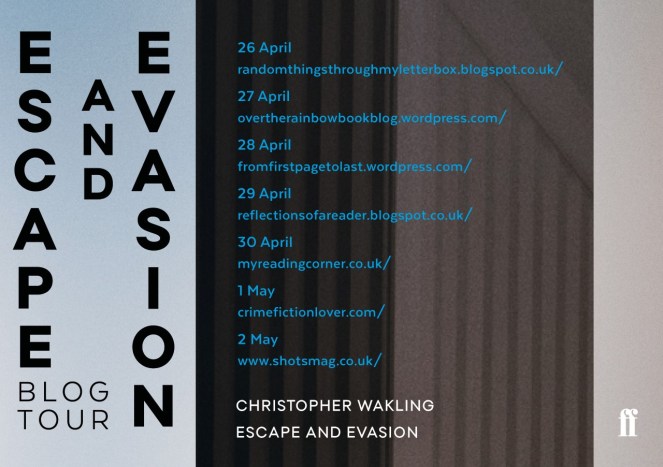
If you liked the sound of this book and would like to find out more please follow the blog tour and find out what these other fabulous bloggers are saying!

 Over The Rainbow Blog