#BlogTour: The Man Who Lived Twice by David Taylor @matadorbooks @annecater #ManWhoLivedtwice #RandomThingsTours #NewFavAuthor #5Stars

51H+BKnqtkL

Book Description:

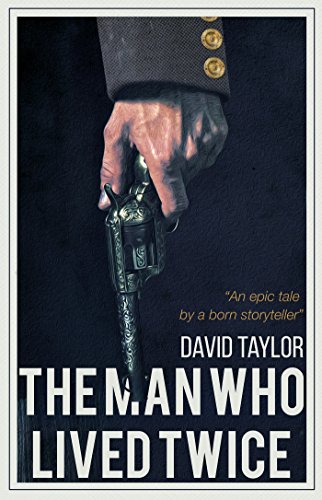
The American Civil War threw up many heroes but none more intriguing than Colonel George St Leger Grenfell, the British cavalry officer who achieved legendary status in the Confederate Army. Having campaigned on four different continents with the wounds to prove it, this Cornish mercenary had a guilty secret. He was a wanted criminal who had bankrupted his own father!

In his critically acclaimed novel, The Man Who Lived Twice, David Taylor tells the enthralling story of a deeply flawed soldier of fortune and his romance with an American femme fatale. Matching Grenfell in courage and dubious morality, Rose Greenhow was a Confederate spy who used her sex appeal to winkle secrets out of Lincoln’s Cabinet. What she lacked though was his indestructibility. Grenfell somehow managed to survive a court’s death sentence, a crucifixion by prison guards and drowning at sea before being erroneously declared dead.

Through deft narration and pitch perfect dialogue, Taylor brings alive the brutal battlefields of the world’s first modern conflict and the memorable characters who made, marred and mythologised America’s post-war reconstruction.’

The Man Who Lived Twice is available to buy now in ebook and paperback.  You can buy a copy of both here.

My Review:

Wow this is historical fiction at its finest, I definitely won’t be forgetting this book in a hurry.

I love books that take real people, events and manage to bring them to life.  I felt like I was experiencing history first hand as if I was standing alongside them watching it all unfold.  The pace of the book is fairly fast moving with something always happening which makes it very exciting and hard to put down.

The author doesn’t shy away from describing some of the battles which can be a bit uncomfortable to read about at times.  He has a great way of describing things so you can really imagine the battles in your minds eye.  I felt like I could smell the sweat, fear and the blood and was on the edge of my seat at times wondering how it’s going to play out.

I couldn’t decide if I liked Grenfell or not.  He was obviously a very brave, clever soldier but he was also quite ruthless and didn’t seem to care who he hurt or brought down.  He seemed to use people to get what he wanted which didn’t always sit well with me.

This is the first book by this author I have read and I’m very excited to read more from him as I thought he was a very talented author that helps make history exciting!

Huge thanks to Anne Cater and Matador Press for inviting me onto the blog tour and for my copy of this book.

About The Author:

71YXWM1Jh5L._SY200_

I came to write novels in a roundabout kind of way. After a career in print, radio and television journalism which took in writing for the Guardian, reporting for Panorama, presenting World in Action and running BBC Features, I set up an independent company to make current affairs and adventure programming. By then, I had written my first book, ‘Web of Corruption’, a factual account of the Poulson scandal. Now, at last, I had time to pursue one of my hobbies, sixteenth century cryptography and one day in Lambeth Palace Library I came across a complex number code that had never been deciphered. It appeared in a report written by a master spy called Anthony Standen. Well, I managed to crack Standen’s code and was rewarded with juicy details of Queen Elizabeth’s love affair with the Earl of Essex. Better yet, the cipher created a trail that led all the way to William Shakespeare. Initial thoughts of a factual publication were shattered by the thought that anything linking Shakespeare to cipher would be laughed out of court and so I turned to fiction writing. I had never written a novel and found it hard going. It required a different skill set to journalism. You have to construct a novel rather like an engineering project while thinking in terms of crisis, climax and resolution. But in the process of learning this strange art, I was bitten by the writing bug.
Hence, ‘The Man Who Lived Twice’ in which the central character is a courageous but deeply flawed nineteenth century Cornish mercenary who fought in wars on four different continents. George St Leger Grenfell helped the Moors bombard the French in Tangier, engaged in a private war against the Riff pirates on the Barbary Coast, joined the Turkish Army but still managed to charge with the Light Brigade in the Crimea, defended the bullet-strewn barricades in the Indian Mutiny, hacked his way through the Opium War in China and joined Garibaldi in liberating Italy, before voyaging to America to enlist in the Confederate Army where he became the highest ranked British officer in their Civil War. And all this from a man who had been disowned by his family after bankrupting his father and committing fraud in France and mosque desecration in Morocco.
You might imagine that I found this perfect anti-hero in Penzance, where his family of tin smelters and bankers had an estate, but that wasn’t the case. I discovered Grenfell four thousand miles away while snorkelling with my wife in the Gulf of Mexico. Our search for tropical fish and sponges took us to a coral atoll called Garden Key which consisted almost entirely of a huge brick fortress. Fort Jefferson had never served a military purpose but it did become a prison at the end of the American Civil War. So we found ourselves in a damp cell being lectured on the Lincoln conspirators who had been incarcerated there. We heard all about Dr Samuel Mudd, the country doctor who had had the misfortune of setting John Wilkes Booth’s broken leg hours after he’d assassinated President Lincoln. Mudd, it transpired, had been something of a hero in Fort Jefferson, nursing the garrison through a yellow fever epidemic after their surgeon died. He had been helped in this charitable work, we were told, by a cellmate, an English spy called Grenfell. Now that captured my attention, particularly when I discovered that he came from my own county of Cornwall. The writing duly followed.


Follow The Blog Tour:

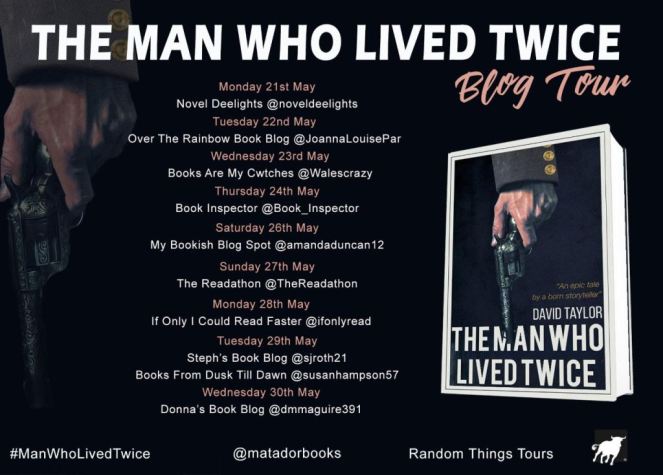
If you liked the sound of this book from my review please follow the blog tour and find out what these other fabulous bloggers are saying.

05212018_livedtwice.jpg


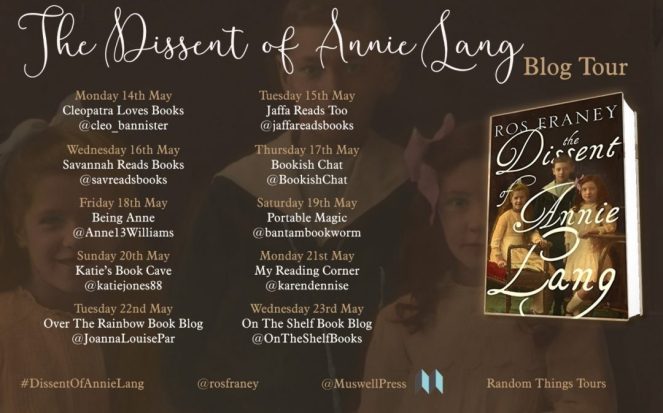
#BlogTour: The Dissent of Annie Lang by Ros Franey @rosfraney @MuswellPress @annecater #DissentOfAnnieLang #RandomThingsTours #5Stars #FantasticHistoricalFiction

Dissent-of-Annie-Lang-Cover-

Book Description:

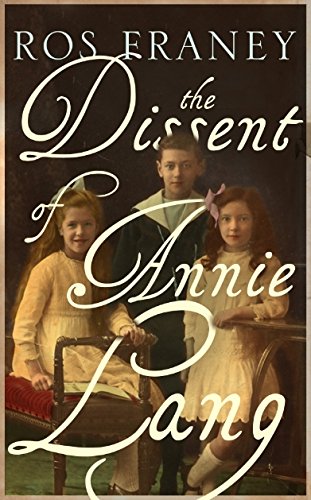
‘My story starts and ends at railway stations, though of course I can’t know this yet as I clamber off the boat-train at Victoria that warm May afternoon…‘

Growing up in a strict religious family in the 1920s, Annie Lang is witness to disturbing events that no one will explain. Only the family dog may know the answers.

Six years on, student Annie returns from France to find her beloved brother in a mental hospital and her ally, the Sunday school teacher, vanished without trace. With the help of her childhood diary, and sister Beatrice, Annie turns detective to unearth the truth.

Her journey leads to a discovery so disturbing that she believes it will ruin all their lives, unless they can atone for the past.

Ros Franey beautifully captures that point when a child can sense, and indeed dissent against, secrets that adults think they are too young to grasp. Impulsive, brave and lovable, Annie Lang is formidable when she takes matters into her own hands.

My Review:

The Dissent of Annie Lang is a book I’d probably not have heard about if it hadn’t been for this blog tour which would have been a huge shame as it’s a fantastic book that should be on everyone’s radar.

Annie is such a fantastic main character.  I absolutely fell in love with her and loved reading about her life throughout this book.  Her way of thinking and expressing herself was very entertaining at times especially when it came to her opinions on the mission and religion which were very funny. Her bravery when trying to find out what was happening or when she stood up to ‘mother’ was very admirable but also heartbreaking at times as you realise how young she is and what she’s up against.  Some of the more shocking parts of the book are even more shocking and poignant when viewed through her eyes.  I really felt her fear and confusion at times and wished I could give her a huge hug.

The author has clearly done her research and perfectly describes life in the 1920’s.  It’s quite shocking to realise how children and the mentally ill were treated in those days. The style of writing and the fantastic characters makes the book a very gripping read.  I wanted to keep reading to find out what happens and to check that Annie was ok.

This is the author’s second book but the first one by her that I’ve read but I’ll definitely be reading more from her in the future.

Huge thanks to Anne Cater and Muswell Press for my copy of this book and for inviting me onto the blog tour.  I thoroughly enjoyed it.

About The Author:

Ros_Franey

Ros Franey grew up in Nottingham where this book is set. She is a maker of award-winning documentaries. Two films about the Guildford 4 and the book she co-authored, Timebomb, contributed to the quashing of their case. This is her second novel; her first, Cry Baby, received excellent reviews. She lives in North London.

Follow The Blog Tour:

If you liked the sound of this book from my review please follow the blog tour and find out what these other fabulous bloggers are saying.

Annie-Lang-Blog-Tour-Poster--1080x673.jpg

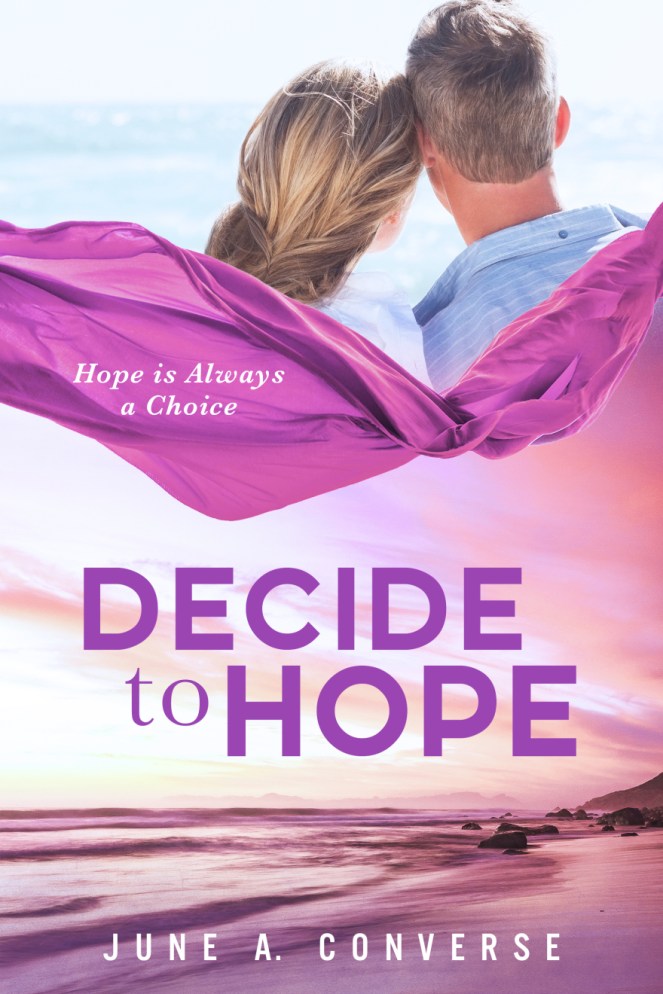
#BlogTour #Spotlight: Decide To Hope by June A. Converse @rararesources #DecideToHope #PowerfulRead


ebook-cover

An unimaginable trauma. A future that seems impossible. When your world shatters, how do you put it back together?

For 950 days, Kathleen Conners has struggled with that choice. Behind a scarf and sunglasses, she hides from the world, from herself, from The Event, from any future with anyone.

After receiving a box of letters from his deceased mother, Matt Nelson is shoved from his predictable, controlled life to a secluded beach in North Carolina. While trying to understand his mother’s intent, he discovers Kathleen.

Matt must choose whether to follow the path his mother orchestrated or rescue the woman who has captured his heart. When the only person Kathleen blames more than herself reappears, can Matt be the strength Kathleen needs to create a new life, or will he be forced to walk away if she decides the climb is too great?

Decide To Hope is available to buy now in ebook and paperback. You can purchase a copy of both here.

For US readers you can purchase your copy here https://www.amazon.com/Decide-Hope-June-Converse-ebook/dp/B07B4H37FL/ref=tmm_kin_swatch_0?_encoding=UTF8&qid=1520592005&sr=8-1-fkmr0 

About The Author:

june-converse-author-photo

June happily resides in Sandy Springs, Georgia, with her husband, Dave, and their dog, Sodapop. They have two wonderful adult children and two grandchildren. She is an enthusiastic exerciser and an accomplished cook. She and her husband enjoy hiking with Sodapop, traveling, scuba diving, trying new restaurants, concerts, and whatever other adventures they can find. Reading and a constant desire to learn keeps her busy too.
A trauma survivor who struggles with mental illness, June is continuously reaching for hope like the characters in her books. She openly discusses her personal struggles on her blog, JuneConverse.com
Decide to Hope is her first novel and relies a great deal on her own experience with trauma, choices, recovery and hope. If you’d like to discuss trauma, coping and recovery, contact her at JuneConverse.com or DecideToHope.com

Facebook: https://www.facebook.com/JuneAConverseAuthor/

Twitter: https://twitter.com/juneaconverse

Website/blog: https://www.juneconverse.com/

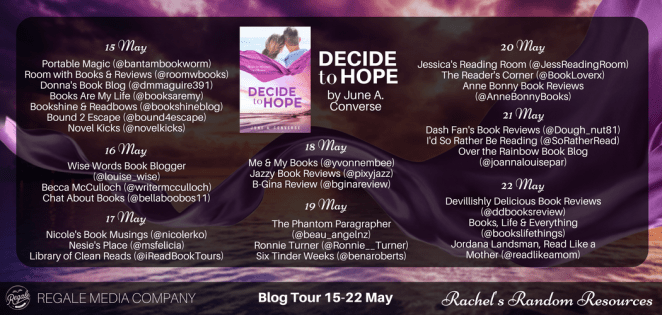
Follow The Blog Tour:

If you liked the sound of this book from my Spotlight Post please follow the blog tour and find out what these other fabulous bloggers are saying.

decide-to-hope-blog-tour-poster-1.png

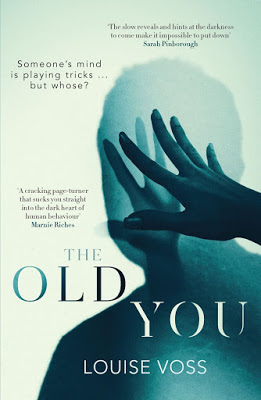
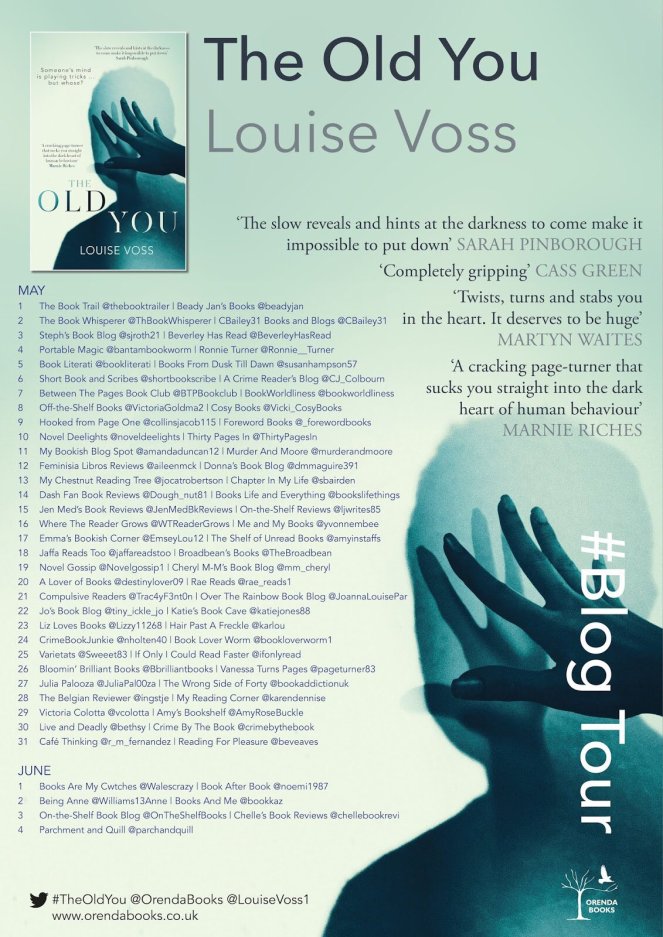
#BookReview: The Old You by Louise Voss @LouiseVoss1 @OrendaBooks @annecater #TheOldYou #RandomThingsTours

THE OLD YOU new cover_preview
The Old You Front Cover

Book Description:

Nail-bitingly modern domestic noir
A tense, Hitchcockian psychological thriller
Louise Voss returns with her darkest, most chilling, novel yet…

Lynn Naismith gave up the job she loved when she married Ed, the love of her life, but it was worth it for the happy years they enjoyed together. Now, ten years on, Ed has been diagnosed with early-onset dementia, and things start to happen; things more sinister than missing keys and lost words. As some memories are forgotten, others, long buried, begin to surface … and Lynn’s perfect world begins to crumble.
But is it Ed’s mind playing tricks, or hers…?

The Old You is available now in ebook and paperback.  The ebook is currently only 99p at the moment! You can buy a copy of both here.

My Review:

I’m a huge fan of Louise Voss so you can imagine my excitement when I was invited onto the blog tour for her new book The Old You.

The story kicks off pretty much from the start as the reader becomes aware that everything isn’t quite as it seems between Ed & Lynn.  The author cleverly releases intriguing facts about the couple and their life together which gives the reader a feeling of increasing unease as you wonder what exactly is going on.  The tension gradually increases as the book goes on, and the many twists and turns keeps the reader on their toes and wondering what was going to happen next.  I had just started guessing what might be happening and boom, the story started going in a completely different way.

I didn’t overly like any of the characters as they all have some kind of flaw which made it hard to warm to them.  I did feel sympathetic towards Lynne however as it must be so hard to watch your partner being affected by something like Dementia and not being able to do anything to help.  Lynne’s helplessness, fear and confusion was almost palpable at times and my heart went out to her as she tried to deal with her new normality.

I’d never heard of Pick’s disease so it was interesting and heartbreaking to learn more about it.  It must be so hard to have such a diagnosis especially when you have seen a family member suffer from it.

This is the second book by Louise Voss I’ve read and it definitely won’t be my last as I absolutely love her unique, highly tense books and can’t wait for her next one.

Huge thanks to Anne Cater and Orenda Publishers for my copy of this book and for inviting me onto the blog tour.

About The Author:

Louise Voss (1)

Over her eighteen-year writing career, Louise Voss has had books out via pretty much every publishing model there is, from deals with major traditional publishing houses (Transworld and Harper Collins), to digital-only (the Amazon-owned Thomas & Mercer) and self-publishing – she and co-author Mark Edwards were the first UK indie-published authors to hit the No. 1 spot on Amazon back in 2011. She has had eleven novels published in total, five solo and six co-written, a combination of psychological thrillers, police procedurals and contemporary fiction. Louise has an MA(Dist) in Creative Writing and also works as a literary consultant and mentor for writers at http://www.thewritingcoach.co.uk. She lives in South-West London and is a proud member of two female crime-writing collectives, The Slice Girls and Killer Women.

Follow The Blog Tour:

If you liked the sound of this book from my review please follow the blog tour and find out what these other fabulous bloggers are saying.

IMG_20180520_204630.jpg

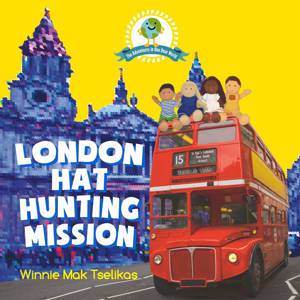
#BlogTour Kirsty #GuestReview: London Hat Hunting Mission by Winnie Mak Tselikas @onedearworld @rararesources @purplekizz

cover-3

I’m thrilled to hand the reins over to my lovely guest reviewer, Kirsty, who is participating in her first blog tour today!

London Hat Hunting Mission is available to buy now in ebook and hardback.  You can buy a copy of both here.

Before I share Kirsty’s review, here is a bit about the book.

Book Synopsis:

Four little Londoners, Hope, Jun, Lea and Parth, come from a different cultural background, are good friends living in London. They are travelling to the iconic places around the city in search of magic hats to cure Mr Globe’s headache. The book is illustrated with a mix of real life photographs of iconic places in London and digital illustration so children can have a vivid visual experience of London and at the same time open up their world of imagination.

Kirsty’s Review:

This is a story book about 4 friends who go on a journey around some of London’s famous places and landmarks to find hats to help their friend Mr Globe.

I have two children, a 2 year old daughter and a 6 year old son, we had a lovely time sharing this book together. I loved the way the 4 characters are introduced and given little personalities, my daughter enjoyed the fact the characters were dolls and my son liked the fact that the illustrations were photos – it made it more real for him.

My son has been to London and liked being able to spot places and monuments he had seen. We liked the different fonts that were used throughout the book, this made the writing stand out for little eyes and kept them engaged. The book says it’s suitable from age 2, however my 2 year old struggled to stay engaged with the story so we talked about the pictures instead which was just as good a valuable learning experience.

My son had fun trying to say thank you in all the different languages and enjoyed looking at all the different hats. I also used to teach primary children and I can see this book would be a valuable addition to a classroom especially with the dolls alongside.
I did find it slightly irksome that the book starts with some gentle rhyming but this doesn’t continue throughout the book. I think children who live in London or have been to London would relate more to this book but my children did like looking at it. If someone is looking for a book to introduce multiculturism to children this is a good choice.

Thank you Kirsty for this fantastic review! 

About The Author:

author-3

Winnie Mak Tselikas is a believer in diversity. Born and raised in Hong Kong, she studied engineering, worked in commercial sales and in 2011 switched to education upon moving to London. There, she met her half-French, half-Greek husband and they had a son, who now has family in China, France, Greece, HK, the UK and the US. Winnie considers her son to be a world citizen rather than of a particular nationality or culture. Inspired by her family and London’s diversity, she founded One Dear World and created the lovely adventures of Mr. Globe and the little Londoner dolls.

Follow The Blog Tour:

If you liked the sound of this book from Kirsty’s review please follow the blog tour and find out what these other fabulous bloggers are saying.

The-London-Hat-Hunting-Mission-blog-tour-poster

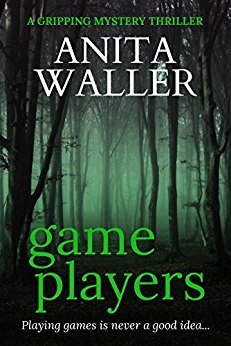
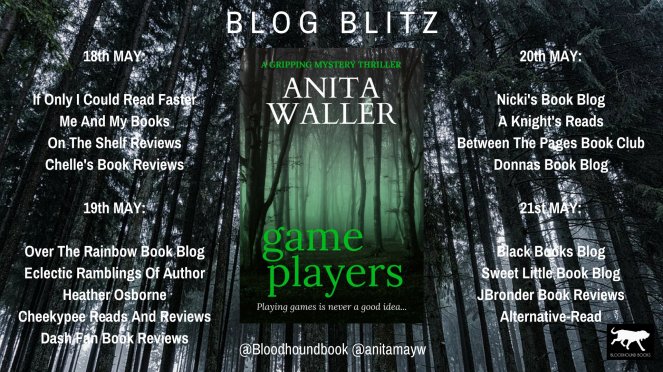
#BlogBlitz: Game Players by Anita Waller @Bloodhoundbook @anitamayw #GamePlayer

51jGK+3m1zL._SY346_

Book Description:

When a gang of six children playing in their den in the woods spot a man burying drugs nearby, it marks the beginning of the end of their childhoods.

Unsure what to do, the children dig up the drugs and take them away. But when the dealer, who they watched bury the stash, shows up dead, the youngsters are thrown into turmoil.

Scared of what might happen, the children tell the police about the body they have discovered.

Meanwhile, a group of gangsters start searching for their missing drugs.

Soon the children and their families become the target of the vicious criminals who will stop at nothing to retrieve their narcotics…

Game Players is available in ebook and paperback now.  The ebook is currently only 99p.  You can purchase a copy of both here.

My Review:

This is the first book by Anita Waller I have read and I’m pleased to say I really enjoyed it.

It’s what I would  describe as a gentle thriller as I felt it was more character than action driven.  It reminded me a little of the film stand by me, as it had a touch of a coming of age story to it.

I loved the setting of the woods.  I grew up playing in the woods and making dens with my friends so I enjoyed the descriptions of the children’s innocent games as it took me back to my childhood. The Gang of Six are a beautiful creation that I hope the author writes more stories about.  I found that I really cared about them and therefore felt more involved in the story as I cared about what happened to them.  I really wanted to be part of their gang, involved in their games and investigations.  They are really close, good friends and I wish I had such friends in childhood.

This is one of the first books I’ve read when I actually felt sorry for the drug dealer.  Vinny seems, underneath everything, an ok guy whose just got into something way over his head.  He’s a criminal with a conscience which is quite sweet to read about.

This isn’t an overly fast moving book but it is a hugely enjoyable one, mainly because of the characters the author has created.  The action alternates between the children and Vinny, the drug dealer, which gives the reader more of a holistic view of what is happening and helps to add to the tension as you are aware of what is happening before the other side.

This is the first book by Anita Waller I have read and I’d be very interested to read more from her in the future, particularly if she was to write another story with the gang of six in it.

Huge thanks to Sarah Hardy and Bloodhound books for my copy of this book and for inviting me onto the blog tour.

About The Author:

71NsgLSbtuL._SY200_

Anita Waller was born in Sheffield, South Yorkshire in 1946. She married Dave in 1967 and they have three adult children.

She began writing when she was around 8 years of age, writing ‘compositions’ at junior school that became books with chapters. She wrote several novels in the romance genre and then realised she wanted to add murders to the romances, so she morphed into a psychological thriller author. Beautiful was her first completed novel in this genre.
The manuscript was submitted to Bloodhound Books who, within three days of reading it, offered her a contract. 31 August 2015 it was released as an ebook, to be followed a couple of days later by the paperback version.
Following the outstanding success of Beautiful, she began a sequel on 27 December 2015, finishing it on 19 March 2016. The new novel, Angel, was launched on 7 May 2016.
Her third novel, 34 Days, followed Angel and was launched on 3 October 2016 to outstanding success; at its highest level, it was #26 in Amazon charts. It is selling equally as well in the US and Australia and has sold over 15,000 copies in the first eight weeks following publication.
She then took time out to temporarily change genre; Winterscroft, a supernatural novel, was launched on 7 February 2017. While she was writing Winterscroft it became clear that fans of 34 Days wanted a sequel, and on 10 August 2017, Strategy was launched.
She is now working on her sixth novel, A Legal Issue, once again set in Sheffield, and once again a psychological thriller.
In addition to writing, she also teaches patchwork and quilting – a little reference to this is likely to surface in every book!
She is a lifelong Sheffield Wednesday supporter with blue blood in her veins! More than a little reference to this is likely to surface – see 34 Days!

Her genre is murder – necessary murder.

IMG_20180518_210155.jpg

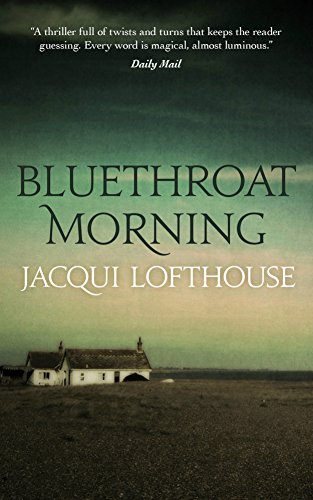
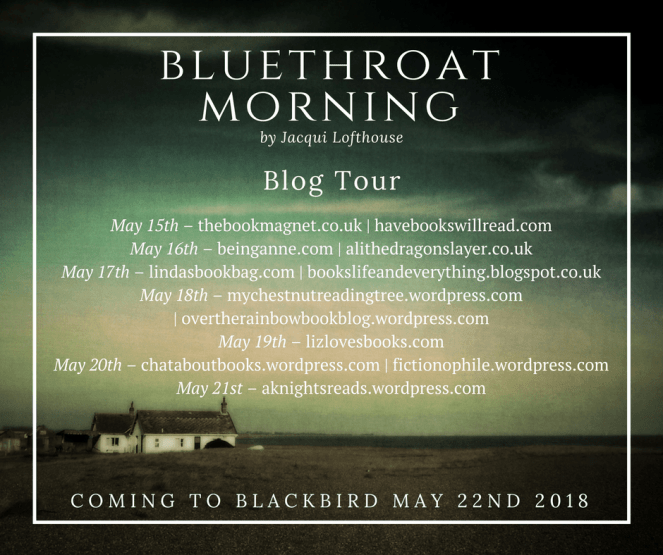
#BlogTour: Bluethroat Morning by Jacqui Lofthouse @jacquilofthouse @Blackbirds_Bks #BlueThroatMorning

51g0FCySiEL

I’m on the blog tour today for Blue Troat Morning by Jacqui Lofthouse and have a Q&A with the author to share with you.

Blue Throat Morning will be published on the 22nd May in ebook.  The ebook price is 99p at the same, you can pre-order your copy here here.

Before I share the Q&A with you, here is a little about the book.

Book Description:

Alison Bliss, celebrity model and critically acclaimed writer, walks into the sea one ‘bluethroat morning’. In death she becomes a greater icon than in life, and the Norfolk village where she lived is soon a place of pilgrimage. Six years later her husband Harry, a schoolteacher, is still haunted by her suicide and faithful to her memory. Until he meets Helen and they fall in love.

Harry and Helen’s relationship initiates a return to the scene of Alison’s death where they meet ninety-eight year old Ern Higham, and a tale is revealed that has been generations in the making. As Harry pieces together a tragic history and finally confronts his own pain, he discovers that to truly move forward, first he must understand the past …

Q&A with Jacqui Lofthouse:

Can you tell us a little bit about yourself?

I’m the author of four novels including ‘Bluethroat Morning’ which was first published by Bloomsbury in the year 2000. On 22nd May this year, I’m delighted that Blackbird will be publishing the first digital edition. It’s a literary mystery, set on the North Norfolk Coast. I’ve written three other novels including ‘The Modigliani Girl’. Writing is a huge part of my life, but I also love to act. I’m married to the cartoonist David Lewis and we have two grown children (aged 17 and 21).

What do you do when you are not writing?

My first love was drama and I’ve recently taken the plunge and started drama school at Identity School of Acting in my early fifties! I’m often to be found in the drama classroom doing voice lessons or movement classes. I’ve begun taking parts in student films too. I find that there’s a great crossover between drama and writing – and acting is making me a better writer. I find my training as a writer also feeds into my performance work.

Do you have a day job as well?

I’m a trained life coach and in 2005 I set up a coaching and mentoring organisation for writers The Writing Coach. I love to work with other writers on their manuscripts and to support them in the process of writing their books and I have a team of freelancers who work for me too, so we cover all genres. Being an entrepreneur definitely keeps me busy! I was interviewed with my friend the writer Louise Doughty here about my tendency to do many things rather than focus on one:

Louise Doughty and Jacqui Lofthouse: Tortoises Rather Than Hares

When did you first start writing and when did you finish your first book?

I began writing in my late teens when I entered a journalism competition in Cosmopolitan magazine and began writing fiction whilst studying drama at the University of Bristol in the late eighties. I used to write really bad and melodramatic short stories. I began writing my first novel, a dystopian story, in my early twenties and shortly afterwards I learned about the MA in Creative Writing at UEA which I applied for. I ended up studying under Malcolm Bradbury and Rose Tremain. At the end of that year I wrote to agents and one liked my first novel. In the end it was the second idea that she sold however and I was incredibly lucky to be commissioned by Hamish Hamilton/Penguin to complete that novel ‘The Temple of Hymen’. I had a six month deadline and wrote like a demon…

How did you choose the genre you write in?

You might say I don’t really stick to one genre, although my fiction might loosely be called ‘literary’ (though the meaning of that term is open to debate!). ‘The Temple of Hymen’ is historical, ‘Bluethroat Morning’ is a mystery, ‘Een Stille Verdwijning’ (only published in Dutch) is also mystery, but ‘The Modigliani Girl’ is a satire/comedy. I’m now writing a YA novel! The fact that I’m more of a ‘literary’ writer in style is, I think, just my personal voice, influenced by my reading over the years. I’m drawn to ideas and stories rather than particular genres. I guess I’m not particularly market-led in the way I write.

Where do you get your ideas?

I often start with strong images, paintings I’ve seen in art galleries – or a sense of place – somewhere that sticks in my mind. I allow myself to dream and write fragments and to research based on those first insights. I’m what you’d call an organic writer, though over the years I’ve developed a much keener sense of how a good plot functions. Rose Tremain calls those initial insights ‘the first mystery’ and I agree with her here – that one should allow those insights to unravel in your imagination. A story never comes to me whole but evolves.

Do you ever experience writer’s block?

To be honest, not really. But as I also act and run a business, I don’t spend so much time at my writing desk as I would in an ideal world. Being part of a writers’ group really helps too as they help me to unpick problems when they emerge and to find solutions.

Do you work with an outline, or just write?

I’d say that at first I ‘just write’ but the further I get into a book, the more I start to plan. I ensure that any plans I have are open to change. I advise the writers I work with to ‘write with a sense of direction’ – never to write a scene without knowing where it is going, to keep the scene dynamic. One has to allow for the magic of the moment however – the sudden insight that changes everything.

Is there any particular author or book that influenced you in any way either growing up or as an adult?

Virginia Woolf and Sylvia Plath. So it’s probably not surprising that I ended up writing about a man investigating the suicide of his wife in ‘Bluethroat Morning’ – there are definitely echoes of the Plath/Hughes story in that book. I remember finding a little original edition of Virginia Woolf’s ‘The Waves’ in my school library when I was in my late teens. I had never heard of Woolf, but I loved the feel of the book and just began reading. I was transported to another world and I think that book was hugely influential on me becoming a writer. I also loved reading Sylvia Plath’s ‘Letters Home’ to her mother, as it taught me the importance of persistence as a writer – and of submissions.

Can you tell us about your challenges in getting your first book published?

To be honest, I was very fortunate. I did submit the dystopian novel to ‘Faber & Faber’ when it was unfinished, before I went to UEA. I hadn’t even heard of literary agents. It’s funny thinking about that now.

With ‘The Temple of Hymen’ I was lucky to have a very established agent representing me. I still remember the call to her in a telephone booth from the British Library, just before Christmas, when she gave me the news about Penguin. I walked down Oxford Street beneath the Christmas lights in a daze.
I’ve had more challenges getting later novels published to be honest. The journey to first publication was pretty smooth for me. But as a mid-career novelist, the challenges are deeper in many ways.

Is anything in your book based on real life experiences or purely all imagination?

I remember visiting the North Norfolk town of Cley in very oppressive weather. I’d already decided to set the novel there (though it’s called Glaven in the book) – and it was my response to that landscape at that particular time that influenced the dark mood of the book. But the events are all entirely fictional. My third and fourth novels use aspects of my experience more. In ‘The Modigliani Girl’ I satirise some of my own experiences of literary life – but it’s only very loosely used!

What was your hardest scene to write?

It was difficult to write Alison Bliss’s notebooks in ‘Bluethroat Morning’ as they were the diary of someone who would go on to kill herself by drowning off the Norfolk coast. Her notebooks also needed to convey a lot of historical story, so it was a challenge. I worked hard to focus on my role as a storyteller, to remain objective, whilst also knowing that I had to understand her mood if I was to make it real to the reader.
How did you come up with the title?
The novel was originally called ‘The Smile of Accomplishment’ – a phrase from a Plath poem (‘Edge’) but Bloomsbury didn’t like that so we looked for a phrase that was already in the book. ‘Bluethroat Morning’ describes a particular kind of weather when that bird is most likely to be spotted – and it was on such a morning that Alison Bliss killed herself.
What project are you working on now?
I’m now working on a YA novel about a girl coming to terms with the death of her father, a war photographer. I’m also working on my first play.
What has been the toughest criticism given to you as an author? What has been the best compliment?
I try to keep a sense of humour about bad reviews. It makes me laugh sometimes to think of the discrepancy between my reviews. The Daily Mail wrote “A thriller full of twists and turns that keeps the reader guessing. Every word is magical, almost luminous.” Whereas one reviewer on the German Amazon site called it “a book that the world could do without”. Really, one has to laugh!
I was particularly thrilled with a review by Tracy Chevalier (before she was famous). She wrote: “There are many elements to savour in this novel: the intertwining of past and present; the struggle to write and the responsibility of writing about others’ lives … Best of all, Lofthouse has a fine eye for the bleak Norfolk landscape and how it both reflects and affects characters’ moods.”

Is there anything that you would like to say to your readers and fans?

If you plan to read ‘Bluethroat Morning’ I’d suggest not going in with expectations. This is not a ‘genre’ novel or a typical psychological thriller. It’s not written to any kind of blueprint. But I hope that reading it will transport you to another world and reward you in unexpected ways. And thank you for taking the time to read my books. I always appreciate contact with readers.

About The Author:

jacqui_lofthouse (1)

Jacqui Lofthouse began her career in radio production and media training. In 1992 she studied for her MA in Creative Writing at the University of East Anglia under Malcolm Bradbury and Rose Tremain. She is founder of The Writing Coach and the author of four novels, The Temple of Hymen (Hamish Hamilton/Penguin 1995/1996), Bluethroat Morning (Bloomsbury 2000/Blackbird 2018), Een Stille Verdwijning, (De Bezige Bij 2005) and The Modigliani Girl (Blackbird 2015). Her novels have sold over 100,000 copies in the UK, the USA and Europe and have been widely reviewed.

You can find out more about Jacqui’s novels here:
(https://www.blackbird-books.com/jacqui-lofthouse/).

Follow Jacqui on Twitter @jacquilofthouse or on Facebook here: https://www.facebook.com/jacquilofthouseauthor or on Instagram @jacquilofthouse

1-Blog-Tour-Poster-Bluethroat-Morning-by-Jacqui-Lofthouse

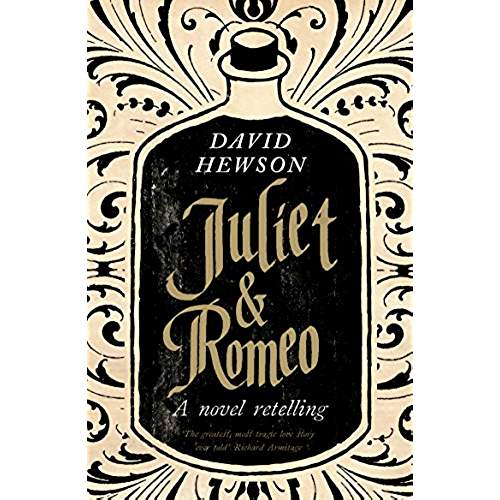
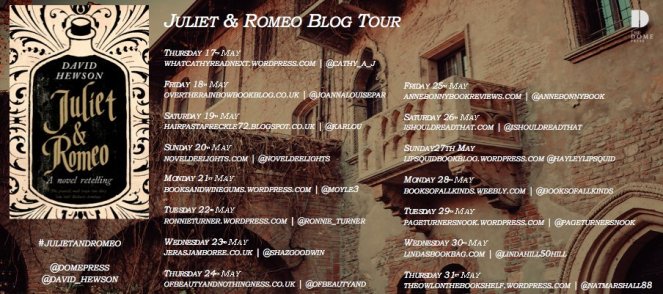
#BlogTour #Interview: Romeo & Juliet by David Hewson @david_hewson @DomePress #RomeoAndJuliet #DomePress

61CUNPsWHfL._AC_US500_QL65_

I’m on the blog tour for Juliet And Romeo by David Hewson today and have a great Q&A with the author to share with you.

Juliet And Romeo is available to buy in ebook and hardback now.  You can purchase a copy here.

Before I share my Q&A, here is a little about the book.

Book Description:

Two young people meet: Romeo, desperate for love before being sent away to study, and Juliet facing a forced marriage to a nobleman she doesn’t know. Fate and circumstance bring them together in a desperate attempt to thwart their parents with a secret marriage. But in a single fateful week, their intricate scheming falls terribly apart. Shakespeare’s most well-known and well-loved play has been turned in to a gripping romantic thriller with a modern twist. Rich with the sights and sounds of medieval Italy, peopled with a vibrant cast of characters who spring from the page, this is Shakespeare as you’ve never read it before.

Q&A:

Can you tell us a little bit about yourself?

I left school at 17 and became a journalist on a local paper. After that I worked for The Times, Independent and Sunday Times before turning to fiction later.

What do you do when you are not writing?

Travel, mess about in the garden and mooch.

Do you have a day job as well?

No – writing is my full-time career.

When did you first start writing and when did you finish your first book?

I tried writing for years and years but it wasn’t until 1994 that I finally finished something that was good enough for a publisher. That book was set in Spain and called Semana Santa (and later turned into a not very good movie).

How did you choose the genre you write in?

I’m not a fan of labels. Sometimes I get tagged as crime, sometimes as thriller. Juliet & Romeo is a historical novel I guess. I just write the books and let other people try to categorise them.

Where do you get your ideas?

Out in the world – it’s full of them.

Do you ever experience writer’s block?

Not really. Sometimes I puzzle over the direction a story is going to take but I always have a destination in mind.

Do you work with an outline, or just write?

Well with Juliet & Romeo I kind of had an outline already from Shakespeare. For my original novels I tend to sketch out an outline and let the characters shape the story was we embark on the journey.

Is there any particular author or book that influenced you in any way either growing up or as an adult?

Big fan of Robert Graves for I, Claudius, brilliant technically and in its ambition too – the fake diary of a Roman emperor. Much copied since.

Can you tell us about your challenges in getting your first book published?

Took me ages to get anyone to read it because there was an assumption no one wanted to read books set in Spain. The first agent who did snapped it up and within three months I had a three-book publishing contract and a movie deal not long after.

Is anything in your book based on real life experiences or purely all imagination?

It’s based on the myth of Romeo and Juliet, as told in Shakespeare and some Italian authors he stole from.

What was your hardest scene to write?

I didn’t find any of them particularly hard to be honest. Once you have your characters right they should drive the story.

How did you come up with the title?

It’s told from Juliet’s point of view so it seemed obvious to me.

What project are you working on now?

I have a new crime novel, The Savage Shore, out in July. This brings back an Italian detective Nic Costa – I wrote nine Costa books before sending him on holiday a few years back. This one is set in Calabria in the toe of Italy and sees him having to pretend to be a gangsters inside the local mob.

What has been the toughest criticism given to you as an author? What has been the best compliment?

Well like any author you get told you just can’t write from time to time. But if you have a thin skin you shouldn’t be in this business. Later this month I’m going to New York where I’ve been nominated for the audio equivalent of an Oscar, an Audie, for the audio version of this book. That’s quite a compliment whether I win or not.

Is there anything that you would like to say to your readers and fans?

Just thanks – and there’s lots more round the corner – much of it different.

About The Author:

David Hewson is the author of fourteen novels and several dramatisations for Audible.com. A dramatic reading of Juliet and Romeo read by Richard Armitage was released in November 2017 to great acclaim. David is a regular columnist and reviewer for newspapers and appears regularly at book festivals around the UK.

IMG_20180517_221534.jpg

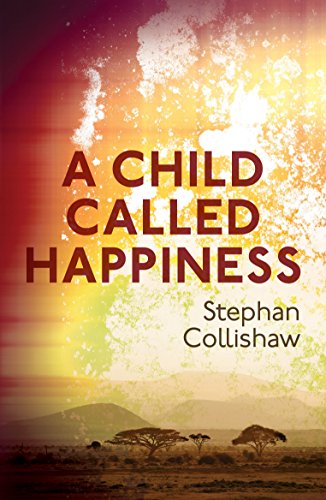
#BlogTour #Extract #Giveaway: A Child Called Happiness by Stephen Collishaw @scollishaw @Legend_Press #AChildCalledHappiness

51GpUiKSibL

I’m thrilled to be kicking off the blog tour for this fantastic sounding book on its publication day.  I have an extract to share and also a paperback copy of this book to give away which is very exciting!

A Child Called Happiness is out today in ebook and paperback.  You can purchase a copy of both here.

Before I share my extract with you and details in how to enter my giveaway here is a little about the book.

Book Description:

An incredibly timely book about the human upheaval in all its emotional forms’ Rosie Garthwaite

Three days after arriving in Zimbabwe, Natalie discovers an abandoned newborn baby on a hill near her uncle’s farm.


115 years earlier, the hill was home to the Mazowe village where Chief Tafara governed at a time of great unrest. Faced with taxation, abductions and loss of their land at the hands of the white settlers, Tafara joined forces with the neighbouring villages in what becomes the first of many uprisings.

A Child Called Happiness is a beautiful and emotive work of historical fiction. This is a story of hope, resilience and reclamation, proving that the choices made by our ancestor’s can echo for many generations to come.


Extract:

Kare kare. Long, long ago. I can still remember the day my father died; I was four years old. But this story does not
start then. No. We shall get to his story by and by. This story begins in the days of my grandfather, in the days of the first Chimurenga – the first uprising.

These fields were ours then; these hills, this earth. Our village nestled in between the boulders on the side of the
valley. There were many huts. The large central hut belonged to my grandfather. His cattle roamed the whole region from the ridge to the other side of the valley. He had three wives, of which my grandmother was the youngest. He was already an old man when he took her as wife. It was a fertile land,
rich and fruitful. The village was close to that of the spirit guide, Nehanda, and like many, he revered her.

His name was Tafara. We are happy, it means, in the Shona language.

It was the year 1896, though Tafara would not have known it as that.

Tafara had settled himself at the top of a high ridge as darkness fell across the valley. In his hands he held the stick
that had belonged to his father. It had been a year since his death and the next day they would be visiting his grave to
perform the ceremony. Back in the village the women were brewing beer and preparing the sadza; it was just possible to hear the sound of voices and music drifting up over the dry grassland.

Tafara lay back against the stone, which was warm still from the sun. The night was heavy, the darkness, like a hot
stifling blanket, blocked out any gleam of light. The moon had not yet risen, but as he lay there the stars began to appear, a glittering sweep of lights, pinpricks of brilliance. Billowing
clouds were massed along the horizon, apparent only from the thick black absence of starlight. The rains had held
off. Normally they would have come by now. Dark clouds gathered and drifted restlessly across the sky, but no rain had
fallen. It had been a poor season; ever since his father had died, the earth seemed to have shrivelled up. The ground was bone hard.

Tafara hugged the stick to his chest and tried to picture his father’s face, but found he could not. He closed his eyes
and delineated the details, the beard, the prominent forehead, the noble bearing; but the parts would not stitch together. His voice, though, remained and Tafara could hear it now,
laying there, as if it had been only minutes before that it had
breathed in his ear.

‘Sango rinopa waneta.’
The forest rewards you when you are weary.

They had been his father’s last words, his voice soft and flutelike as he lay upon his deathbed. Tafara felt now the soft weight of his father’s hand on his head. Heard the exhaustion in his voice. Saw still, piercingly clearly, the slow rise and fall of his emaciated chest beneath the thin blanket.

‘Yes, father,’ he had whispered.

But he did not know what his father had meant. Was it a criticism? Was it encouragement? This was Tafara’s sixteenth season of rains and he felt ill-prepared for the responsibilities
about to fall upon him as the eldest son.

A sudden noise disturbed his thoughts. Alert, he sat up, his ears straining. The darkness was impenetrable; it was barely possible for him to see his hand in front of his face. Slowly and silently he slipped the long knife from his belt. His hand was trembling, but he breathed deeply, slowed the race of his heart and raised himself onto the balls of his bare feet. Somewhere a little below him he could hear movement in the undergrowth. A low rustle. He listened intently trying to gauge the size of the creature making the noise, listening for its breathing, for the sounds that might identify it, but little carried.

He eased himself down from the rock, placing its smooth surface against his back, taking care to detect the direction
of the soft breeze. He flared his nostrils, inhaled deeply, analysing the scents in the air. Wood smoke. He dropped to
a squat. The village was behind him on the other side of the ridge and the breeze was blowing away from it. It was thin, a small fire. He eased forwards silently. As he crept over the ridge he saw the soft glow of the flames, half way down the incline.

He moved to within thirty feet of the fire, keeping low. His view was partly obscured by high brush and he had to
work around them, dipping below some large boulders and through a small copse of Msasa. He had crept closer than he anticipated. Two men were seated by the small fire. The first
was of middling height dressed in a khaki green jacket. His hat had been discarded next to him. The second sat on the opposite side of the fire and little was visible of him beyond his gaunt face and beard.

It was not the first time Tafara had seen white men; they had been making incursions through the region more and
more regularly. A small group of men had visited his father more than a year before, wanting to purchase land at the
head of the valley where they had found deposits of gold. His father had turned them away. One of the white men had taken a large box from the back of their cart and erected it in front of the village. He had assembled the villagers in front of one of the huts and then disappeared beneath a black sheet in front of them. Tafara recalled the incident now and smiled, remembering their incomprehension at the behaviour of this white man hidden beneath his sheet before them.

Sometime later he came out from under it, grinned at them and laughed, and they laughed too at his madness. But,
before he left, the white man presented them with a little miracle. On a card, no larger than the width and length of
his hand, he presented them with the image of themselves as they had been at that moment, stood before the hut. Tafara did not understand what he had done, but he cherished that small miracle the white man gave him and kept it safely among his possessions.

For a while he watched the two men passing a small canteen between themselves, talking in low voices. When he was assured that they posed no danger he crept away, circling the kopje, moving silently, his ears alert for more of the white men; but the night was quiet.
The village glowed in the deep night and voices and music were audible as soon as he crossed the ridge. A cow
had been slaughtered earlier in the day and the rich smell of the meat hung heavily in the air, making his mouth water as he made his way back. There was singing and the sound of the mbira. Many of the men were drunk when he passed through the village towards the central hut. Kamba, his uncle, was sprawled out in the shadows snoring loudly.

Tafara slept fitfully and was woken by a deep grumble shortly before dawn. For some moments he lay listening, but
the village was silent and he drifted back to sleep.
They woke very early the following day, and taking the sadza that had been prepared and the beer, they made their
way to the burial site of Chimukoko. The weather was heavy and uncomfortable, the air tense as though it might snap.
Spreading out the food upon the grave, the women gathered around, a low chant rising rhythmically in the gathering dawn light. They poured the libations of beer across the ground.

At the appointed time, Tafara was motioned forward. He stood nervously and glanced across at his uncle. Kamba
was the younger brother of his father and many of the tribe looked to him for authority. Kamba’s head was lowered and his hand rested on his large belly. He had dragged his feet all the way to the burial ground, hung over from the previous evening’s excesses. Raising his head slightly, he glanced at Tafara and nodded slowly, barely perceptibly, before letting his chin settle back against the rolls of fat on his chest.

‘Mudzimu!’ Tafara called out, kneeling before the grave. ‘Spirits hear! We welcome you back home. Come guide your family. If there is anything you need, please let us know. Have patience with us. Treat us with mercy.’

The earth shook. The heavens clapped with rage and the burial ground was illuminated by a brilliant, jagged flash
of light. A sudden silence descended upon the mourners, and Tafara felt his heart rise into his mouth. He jumped to
his feet.

‘Mudzimu!’ he called.

Following the brilliant light, the day seemed plunged into darkness. The clouds had been gathering since dawn and hung heavily now over the tops of the baobabs and Msasa. As he lifted his face to the sky he felt the first drop of water. He grinned. And suddenly it was raining; hard, large pellets of water that slapped against the skin and sizzled against the hot earth and rock. A torrential outpouring, which, as they
made their way back to the village obscured their view, ran down their bodies, formed a liquid curtain across their path. The red earth stained their feet and ankles, and rode up their legs; it squelched between their toes as they walked.

The huts were warm and dry. Tafara sat in the centre of the largest, the sound of the mbira and drums drowning out
the rain. His head swam with the beer and his senses were stimulated by the scent of the roasted calf and the duiker. He felt taller, more assured; he noted the respect in the voices of the women who brought him food.

Across the fire sat Kamba, his lips glossy with the juices of the meat they had eaten. Kamba smiled. His face jumped
in the heat that rose from the fire.

‘You have your father’s blessing,’ Kamba said.

Tafara nodded. ‘Sometimes I am frightened,’ he said.

Kamba waved his hand dismissively. ‘There is no reason to be afraid. Your father’s spirit will guide you. You are a
young, strong man. For generations our family has lived on these lands and your children’s children will remember you in these same caves. What greater blessing could you want?’

‘My father was a wise man.’

‘And in time so shall you be. Listen to the spirits. Listen to the elders. Love the land. That is all that is asked of you.’

That night, Tafara returned to his young bride. It was dark when he went in to her and she was sleeping already.
When he lay down beside her, she stirred and awoke, her eyes opening, blinking in the darkness, the faint light of the moon falling through the open door reflecting weakly in her large eyes. She murmured something, but he covered her mouth with his hand. He ran his hand across the smooth
expanse of her naked back, down to the rise of her buttocks. He brushed his fingertips against her hardened nipples. He pressed his face into her neck and inhaled the sharp, animal scent of her. She moaned softly and turned onto her back. His fingers traced down across her flat stomach, into the warm, wet crease between her legs.
‘Tafara,’ she said.  Carefully he got on top of her and her hands took him and guided him. He buried his face in against her flesh and she
held onto him.
After, when she was sleeping again, he stood at the door of the hut and gazed out across the village. The sky had begun to clear and the moonlight reflected off the wet thatch. Nothing stirred. Behind the village rose the bulk of the hill, while to the south and east the valley dropped away. His land. The land of his fathers. The land of his children.

Tafara leaned back against the doorpost and smiled.

He had almost forgotten the previous evening.

UK only Giveaway:

I’m so excited to have a paperback copy of this book to giveaway!

As usual, all you have to do is RT the pinned tweet on my Twitter page and tag some friends you think would also to enter.

Or in Facebook like this Giveaway post on my  Facebook page and tag some friends!

I’ll keep the Giveaway open until Monday and then get my lovely son to pick a winner!

Good Luck everyone!

About The Author:

518v194QHXL._SY200_

Stephan Collishaw was brought up on a Nottingham council estate and failed all of his O’levels. His first novel The Last Girl (2003) was chosen by the Independent on Sunday as one of its Novels of the Year. In 2004 Stephan was selected as one of the British Council’s 20 best young British novelists. His brother is the renowned artist, Mat Collishaw. After a 10-year writing hiatus, The Song of the Stork is Stephan’s highly anticipated third novel. Stephan now works as a teacher in Nottingham, having also lived and worked abroad in Lithuania and Mallorca, where his son Lukas was born.

Follow Stephan on Twitter at @scollishaw

Follow The Blog Tour:
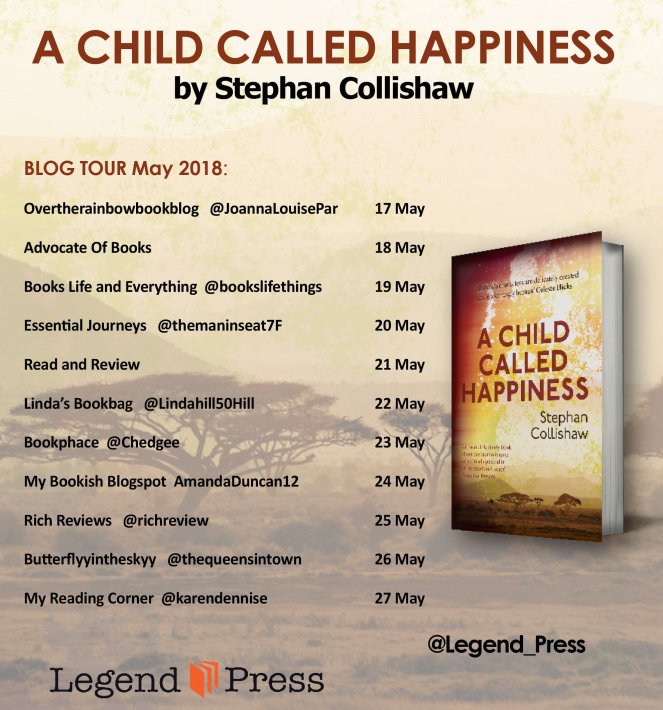
IMG_20180517_094956.jpg

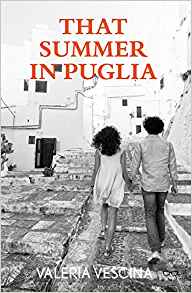
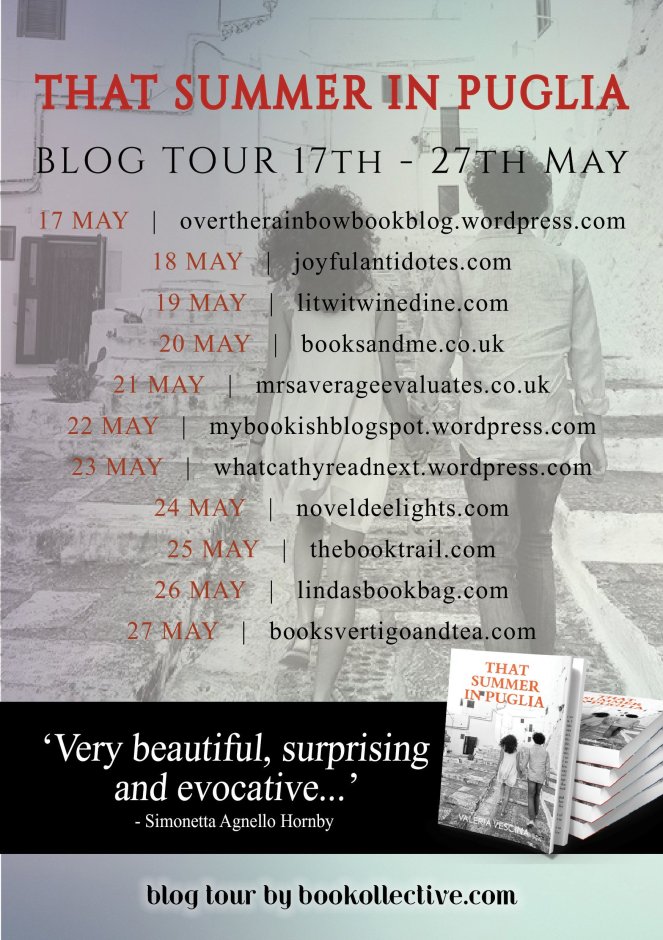
#BlogTour #Extract: That Summer In Puglia by Valeria Vescina @ValeriaVescina @EyewearBooks @Bookollective #ThatSummerInPuglia #Bookollective

download (2)

Book Description:

Tommaso has escaped discovery for thirty years but a young private investigator, Will, has tracked him down. Tommaso asks him to pretend never to have found him. To persuade Will, Tommaso recounts the story of his life and his great love. In the process, he comes to recognise his true role in the events which unfolded, and the legacy of unresolved grief. Now he’s being presented with a second chance – but is he ready to pay the price it exacts? That Summer In Puglia is a tale of love, loss, the perils of self-deception and the power of compassion. Puglia offers an ideal setting: its layers of history are integral to the story, itself an excavation of a man’s past; Tommaso’s increasingly vivid memories of its sensuous colours, aromas and tastes, and of how it felt to love and be loved, eventually transform the discomforting tone with which he at first tries to keep Will and painful truths at a distance. This remarkable debut combines a gripping plot and perceptive insights into human nature with delicate lyricism.

That Summer In Puglia is available in paperback now.  You can purchase your copy here.

Extract:

And here is the display case with the coin casts. Only five remain. One crumbled on my journey to the UK. Two more shattered a year later, when a nosy flatmate dropped the case from the chest of drawers on which it lay. With time they’ve all become so brittle. Recently one more broke between my fingers. I’ve wept, on my knees, for every one I’ve lost.

But you’re anxious to discover what happened to my father. As you’ll have perceived by now, life would have taken a completely different turn, with him by my side. The coin casts I’ve just shown you were there – witnesses as well as players – in the final act you’re so impatient to reach. I’ll never forget the last conversation my father and I had about them. It took place during the drive to Brindisi to collect the ninth piece. I remember almost every word of it – soon you’ll see why.

***

‘I’m so happy that you really appreciate those casts, Tommaso,’ my father said. ‘Monetary and personal value can be such different things.’ He glanced at me in the passenger’s seat before re-focusing on the litoranea, the coastal road, straight ahead.
‘I know. I know,’ I said with all the certainty of a ten year old. My hands, on my lap, gripped the display case containing the casts. Showing them to Damiano was the least I could do – he would be pleased to see them treasured.
Olive groves, vineyards, fig trees, oleander hedges, tall blackberry bushes and the monumental paddles of prickly pears flashed past us. New leaves were sprouting on vine stumps and fig trees, while cream and pink buds peppered the oleanders. The four o’clock sunshine swathed the fields with a crispness like silk that in Puglia is peculiar to early April. I wondered what had been the same and what had differed when anonymous travellers had journeyed on the Via Traiana, with in their purses denarii like the one whose cast I was about to collect, as I plastered my nose to the window of our blue Alfetta.
‘Quite a range of periods you’ve got there.’ My father flicked his head towards the plaster casts.
‘I chose coins that looked as different as possible from each other.’
‘Funny. D’you know what? If children everywhere did the same – from Cairo to Canberra – the world might be a more peaceful place. Everyone’s a mixture, so a notion of all the bloods mingling in our veins, and of the roller coaster of history, might do some good.’
‘Silly Daddy.’ I mimicked the sing-song tone with which Mummy teased him whenever he surprised her with this kind of observation. ‘Going off on a tangent,’ she called it.
‘I’ll tell you what those coins of yours are whispering in my ear.’ His tone too was jokey, now. ‘Your high cheekbones are a gift from a shepherd from southern Illyria who settled here – today they’d call him Albanian and try to repatriate him. Your left eyebrow was definitely drawn by a young Greek bride – she used her finest black make-up powder, I can tell.’
‘Oh, Daddy…’ I rolled my eyes and laughed.
‘Wait, I have it all on good authority.’ He put on an air of mock solemnity. ‘Your forehead was the gift of a Roman miles who got his nastiest scars in the war against the great-great-grandchildren of your Greek great-great-etc-grandmother. The wife of a Byzantine soldier-turned-merchant drew your right eyebrow, and a brilliant job she made of it, too – she wasn’t going to be outdone by her Greek rival.’
‘And my coins are whispering all this?’
‘Of course. There’s one for an ancestor of almost every origin.’
‘Ok. But tell the remaining ones that there have been too many soldiers so far.’
‘Well, what do you expect? I’ll see what I can do, but this region was a battleground. To be a porta d’Oriente, a gateway to the East, might sound poetic, but to those who happened to live here it was often a curse.’ He recovered his breath before continuing – his chest heaved and relaxed again. ‘You owe your blue eyes to a Norman – a soldier at first, I’m afraid, but a peaceable landowner later. A handsome Arab, maker of damascened shields in Lucera, passed on to you his raven-black hair. That fine nose is from an Anjou young man destined for the priesthood malgré soi just by dint of being the youngest son – not all too keen on the vow of chastity, but can you blame him in the circumstances? And finally, to your smooth, light-amber skin: your bequest from a penniless Andalusian bard brought over by a Spanish governor to lighten the load of his foul posting to a malaria-infested Apulian town. How am I doing? That should make eight coins.’
‘Bravo. That was funny.’

His lips formed a wide smile which showed up the dimple in his right cheek.

About The Author:

IMG_20180516_222136

Valeria Vescina is from Puglia, was educated in Switzerland and the UK, and has lived for years in London with her family. After a successful career in management, she gained an MA in Creative & Life Writing at Goldsmiths (University of London). That Summer In Puglia is her debut novel. Her activity as a critic includes reviews for Seen And Heard International, Talking Humanities and the European Literature Network. She has taught creative writing workshops on the narrative potential of various art forms. Valeria also holds a degree in International Studies (University of Birmingham) and a Sloan Msc. in Management (London Business School).

Follow The Blog Tour:
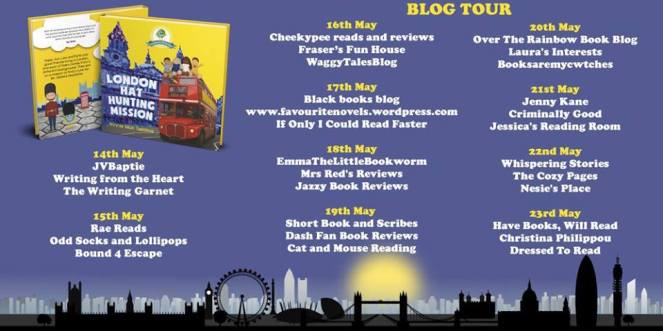
If you liked the sound of this book from my review please follow the blog tour and find out what these other fabulous bloggers are saying.

IMG_20180516_222404.jpg