
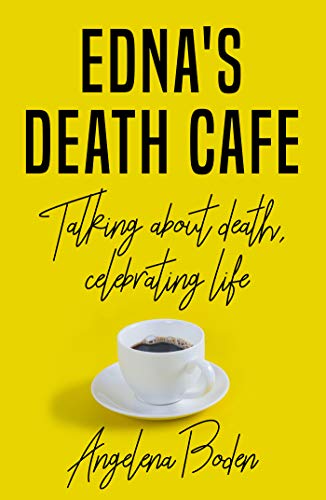
Good morning everyone I’m on the blog tour for Edna’s Death Cafe by Angelena Boden today and have a great guest post to share with you. Thanks so much to the lovely Sarah for letting me post a guest post instead of a review as my ten month old has a bad cold, isn’t sleeping and is very clingy.
Edna’s Death Cafe is available in ebook now for the bargain price of £2.99. You can purchase your copy here.
Before I share my guest post with you here is a little bit about the book.
Book Synopsis:
As in life, death is not without its agenda. This is something seventy-nine year old Edna Reid finds out when her partner, Ted, suddenly dies.
To cope with her loss, she sets up a Death Cafe to break down the taboo around death and to encourage other members of the community to discuss it openly. Over tea and cake, the participants hide their fears behind a veil of dark humour.
Religious fanaticism clashes with Victorian spiritualism as Edna’s meetings trigger lively conversations on the fragility of life, anxiety over dying, cost of funerals, and making sure long-lost greedy relatives don’t benefit from inheritances.
Soon, a series of events begin to unfold which threaten to undermine Edna’s livelihood and the Death Cafe meetings. These events just happen to coincide with the arrival of a mysterious stranger into the village.
Who is she and why is she so hostile to Edna?
Guest Post:
DYING TO EAT

Food is the essence of life. Without it we would die which is ironic considering the last thing we want to do is eat when someone we love has died. Notice I am not using euphemisms of passed away or called to be an angel. It’s because I believe that to conquer a fear we need to name it.
The first time we are faced with having to eat publicly after a death is usually at the funeral. Well-wishers encourage us to ‘keep up our strength,’ or ‘to just have a little something.’ The funeral tea or wake is about sharing memories over platefuls of nibbles, maybe some favourites of the deceased, and raising the mood.
We get buried in food when news breaks of a death of a close family member. Plied with soups, stews, curries and sponges by neighbours and friends the moment the news of a death breaks, eating is often the last thing we want to do yet the act of making comfort foods for those who need comforting replaces a need to search down the back of the sofa for those lost words of consolation.
Fridges and freezers get packed to overflowing so that no-one has to think about what to buy, prepare and cook. The business of grief needs all available energy.
There lies the problem. We should eat but our stomach tells it isn’t not ready. If we could swallow a little of the creamy pasta, not only would we bring relief to those desperate to find a way to heal our broken hearts but also to ourselves as a small act of defiance against the raging beast of grief which feeds on our loss like a vampire guzzling blood.
The link between grief and loss of appetite is often seen as an emotional one but from my experience it was physical. Nausea, a weakness in the joints, muscle fatigue, brittle hair, insomnia and an inability to stop crying went on for months. My body craved essential vitamins and minerals but I didn’t care if I never ate another morsel.
Everyone has their own way of dealing with this dangerous situation but it needs support from family, friends and medics. Swallowing was my biggest problem and it was liquid compounds three times a day that helped make the switch back to regular eating. It took two hours to drink one small bottle in between sleeping but it was a start. Small portions of nursery food followed – banana and custard, ice cream, then liquidised soups, white fish. It took time and maybe my situation was unusual.
Foods that triggered painful memories were avoided for a long time and nobody should be pushed into eating more than they can manage as in the ‘just one more mouthful’ scenario of our childhood tussle with Brussel sprouts.
Emotions can shut down our appetite or they can scream out to be fed. Grief eating is common but if we stuff down excess carbohydrates which are known to be mood lifters then we run the risk of weight gain, feeling unwell and in some cases self-hate. Extremes are never helpful, especially when it comes to maintaining good health and what we need for a full physical recovery.
Water is essential as opposed to alcohol which is not. I drank lots of it with lemon or Vitamin C tablets mixed in. As taste returns from its shocked state, like the rest of the body, we become attracted by colourful, natural foods; berries, peppers, tomatoes, aubergines, honey and find ourselves returning to a new sort of normal.
Food is best eaten with a companion. The lonely bereaved know they have to look at an empty place setting across the table so stop eating. If this is you, then take a tray, put on some music, watch TV, do something different. If you know of someone who has been bereaved and is alone, don’t just take a pot of macaroni cheese over. Ask if you can eat with them or better still invite them to your home once a week as something to look forward to. It’s important to tell them that you would really like that.
Some of this might resonate with you. Or maybe not. We are all so different and respond to grief in our individual ways. Some prefer to be alone to process their thoughts, others are terrified of the strength of their own emotions.
All I can say is that a portion of chips was worth more than words to me in the early days. Especially when shared. Even though that contradicts everything in this blog, I think Edna would approve of that.
If you’ve been affected by any issues in this blog, you can speak to:- https://www.cruse.org.uk/
https://www.samaritans.org/
They can put you in touch with specialist support groups.
About The Author:
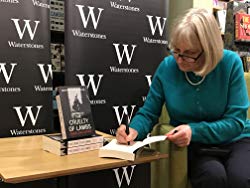
Angelena Boden has spent 35 years writing and delivering training programmes on resolving conflict, interpersonal skills and advanced communication. Amongst her many international projects, she set up a charm school for nightclub door staff in the 80s, worked in Belfast on a skills development programme to help people on the Shankill Road get back into work and has helped large numbers of young unemployed and ex-offenders to find their place in society.
She speaks four languages and has travelled extensively.
Angelena writes dark, compelling fiction which are described as gripping psychological thrillers and domestic noir. She is keen to connect with readers via twitter @AngelenaBoden


 Over The Rainbow Blog