
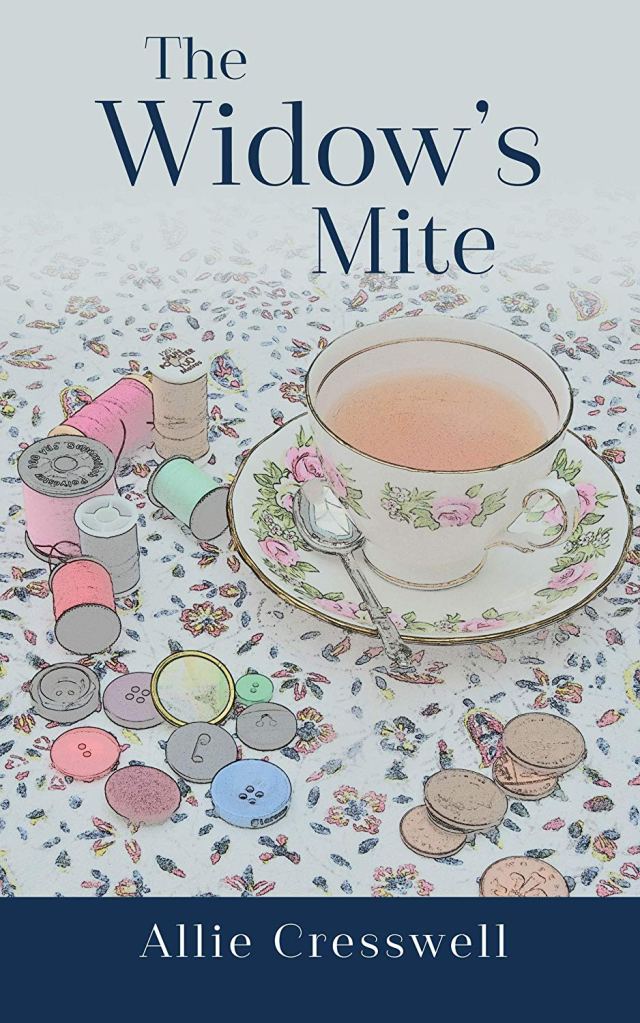
Book Synopsis:
Minnie Price married late in life. Now she is widowed. And starving.
No one suspects this respectable church-goer can barely keep body and soul together. Why would they, while she resides in the magnificent home she shared with Peter?
Her friends and neighbours are oblivious to her plight and her adult step-children have their own reasons to make things worse rather than better. But she is thrown a lifeline when an associate of her late husband arrives with news of an investment about which her step-children know nothing.
Can she release the funds before she finds herself homeless and destitute?
Fans of ‘The Hoarder’s Widow’ will enjoy this sequel, but it reads equally well as a standalone.
The Widow’s Mite is available in ebook and paperback now. You can purchase your copy using the link below.
Guest Post:
Article for Over The Rainbow Book Blog
Personally, I love a book written in multiple time frames. I have recently discovered Sarah Maine who uses this narrative technique very well. Her books flip between the past and the present, each chapter ending on a sort of cliff-hanger before the reader is whisked off to another time. Lots of others exist. Barbara Erskine’s Lady of Hay is a brilliant example. Daphne du Maurier’s The House on the Strand is another. But these deal with time frames which are centuries distant from each other and involve time travel in some form or another.
Many writers use the discovery of hidden diaries or letters, messages and clues to link the past and the present. I enjoy books like that. I am reading one currently; The Memory Tree, by Linda Gillard. Others employ ghostly figures or mysterious moanings. I’m not so keen on those, unless the supernatural is handled delicately, by suggestion and implication.
Of course the past always informs the present and all characters have backstory which sometimes comes out in a straightforward way through narration or via dialogue. Occasionally, though, it turns out that it is too important to simply slip in. It deserves proper telling.
In The Hoarder’s Widow, the main thrust of the story concerns the huge task faced by a widow (Maisie) as she disassembled her late husband’s hoard of clutter. I hadn’t expected the deceased man to feature at all, except as his obsession impacted his wife. But I found that he (his name is Clifford) also had a story to tell and I needed him to tell it if he wasn’t to come across as just a crazed and selfish monster. I discovered that I also needed to trace something of the early married life of the couple, to show how gradually Clifford’s addiction had developed and how Maisie had rationalised it in her mind. Otherwise readers would not understand why she allowed or endured it. My solution in this case was to intersperse Maisie’s story with some first person interjections from Clifford. His voice is disembodied, ghostly in that it is from beyond the grave, but he doesn’t know that he is dead. Hearing him explain his ‘collecting’ really humanises him, I think. It also chimes in with Maisie’s sense that he is still in the house, somehow, lurking, picking over his boxes and bags, disapproving as she gradually has his stuff hauled away.
As part of Maisie’s emergence from the shadow of her bereavement, she meets a group of similarly circumstanced women. These, too, began to intrigue me. They all had backstories too. I deliberately didn’t explore or explain them in The Hoarder’s Widow and thus the next book in what I envisage to be a series, came to be. My main problem for the second book, The Widow’s Mite, was that I wanted to carry on the story of Maisie (because by that time she had not one but two possible new love interests) while at the same time going back in time to explore the story of one of her women friends, Minnie Price. I needed these two story threads to coincide at some point, and carry on together. Technically, this was challenging. Readers of The Hoarder’s Widow would want Maisie’s tale to make progress, so it had to move forward, however slowly. But Minnie’s story had to start a year or so beforehand and then catch up.
In the end I decided on three narrative techniques to achieve this end in The Widow’s Mite. The final book has alternating chapters that flip backwards and forwards between the two threads, but I wrote each thread in its entirety beforehand because it was just too hard changing tone and setting; Minnie’s story is sad and heart-rending, Maisie’s is bright and optimistic. I found I struggled to leap from one to the other either in my head or on the page. Plus, they are written in different tenses. Maisie’s story is written in the present tense, Minnie’s in the past tense. While Maisie’s story unfolds right before her and the reader, Minnie’s is retrospective until it catches up with Maisie in time, when both narratives assume the present tense. This was my second narrative strategy but it was tricky not to lapse into the wrong tense while I was still trying to write them side by side. Lastly, I decided that Maisie’s story would take place on one day (more or less), while Minnie’s would evolve over the space of one year. Thus, (I hope) the pace in Maisie’s chapters is languorous and introspective, while the pace of Minnie’s story is brisk.
I wasn’t wholly sure until the book was finished whether I had pulled it off, worrying up to that point whether I had one book or two.
In the end I think I’ve nailed it but, as always, the reader is the final arbiter. You shall be the judge.
I hope you’ll give The Widows series a try. I’d be delighted to know what you think. You can contact me via my website or (far better) leave a short review.
About The Author:
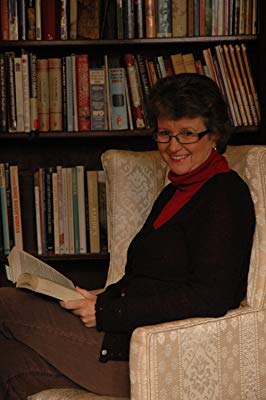
Allie Cresswell is the recipient of two coveted One Stop Fiction Five Star Awards and three Readers’ Favorite Awards Allie was born in Stockport, UK and began writing fiction as soon as she could hold a pencil. Allie recalls: ‘I was about 8 years old. Our teacher asked us to write about a family occasion and I launched into a detailed, harrowing and entirely fictional account of my grandfather’s funeral. I think he died very soon after I was born; certainly I have no memory of him and definitely did not attend his funeral, but I got right into the details, making them up as I went along (I decided he had been a Vicar, which I spelled ‘Vice’). My teacher obviously considered this outpouring very good bereavement therapy so she allowed me to continue with the story on several subsequent days, and I got out of maths and PE on a few occasions before I was rumbled.’ She went on to do a BA in English Literature at Birmingham University and an MA at Queen Mary College, London. She has been a print-buyer, a pub landlady, a book-keeper, run a B & B and a group of boutique holiday cottages. Nowadays Allie writes full time having retired from teaching literature to lifelong learners. She has two grown-up children, two granddaughters and two grandsons, is married to Tim and lives in Cumbria.

 Over The Rainbow Blog