

Book Synopsis:
Many of us are worried (or at least we should be) about the impacts of globalization, pollution, and biotechnology on our diets. Whether it’s monoculture crops, hormone-fed beef, or high-fructose corn syrup, industrially-produced foods have troubling consequences for us and the planet. But as culinary diversity diminishes, many people are looking to a surprising place to safeguard the future: into the past.
The Lost Supper explores an idea that is quickly spreading among restaurateurs, food producers, scientists, and gastronomes around the world: that the key to healthy and sustainable eating lies not in looking forward, but in looking back to the foods that have sustained us through our half-million-year existence as a species.
Acclaimed author Taras Grescoe introduces readers to the surprising and forgotten flavors whose revival is captivating food-lovers around the world: ancient sourdough bread last baked by Egyptian pharaohs; raw-milk farmhouse cheese from critically endangered British dairy cattle; ham from Spanish pata negra pigs that have been foraging on acorns on a secluded island since before the United States was a nation; and olive oil from wild olive trees uniquely capable of resisting quickly evolving pests and modern pathogens.
From Ancient Roman fish sauce to Aztec caviar to the long-thought-extinct silphium, The Lost Supper is a deep dive into the latest frontier of global gastronomy—the archaeology of taste. Through vivid writing, history, and first-hand culinary experience, Grescoe sets out a provocative case: in order to save these foods, he argues, we’ve got to eat them.
My Review:
The Lost Supper is a fascinating, timely book that I really enjoyed reading.
Firstly, after reading a similar book earlier this year I have become very interested in the art of foraging and alternative food sources. The idea that we don’t use a lot of the same food as our ancestors was interesting to learn about and I enjoyed learning more about the difference in our diet.
There are some very intriguing subjects covered in this book which I found fascinating to learn more about. It was great to learn the history of Wendlesdale cheese or to find out more about sustainable farming methods. The descriptions of the food were often very vivid which made me feel hungry as I read. Though this wasn’t always beneficial as the vivid description of the author eating bugs made me feel a bit queasy.
Overall I thought this was an interesting read that I’d definitely be recommending to people interested in the subject of alternative food sources. It’s definitely piqued my interest in exploring this concept and I look forward to trying out new things soon.
Huge thanks to Anne Cater for inviting me onto the blog tour and to the publisher for my copy of this book.
About The Author:
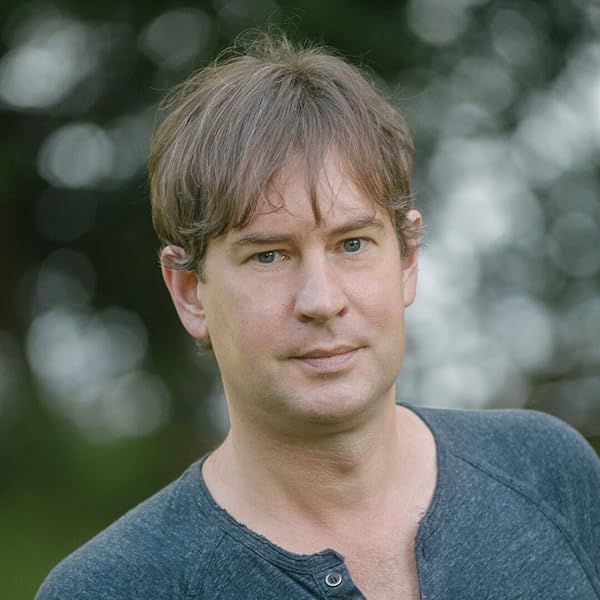
Taras Grescoe, a non-fiction specialist, writes essays, articles, and books. He has given dozens of keynote talks on the subject of urbanism, sustainable transportation, and building cities around walking, cycling, and transit.
(Contact information for interviews and appearances here:
http://www.tarasgrescoe.com/straphanger/contact.html)
He is the author of Sacré Blues, The End of Elsewhere, The Devil’s Picnic, Bottomfeeder, Straphanger, and most recently, Shanghai Grand.
Taras is a frequent contributor to the New York Times, the Guardian, and National Geographic Traveler. He has written features for Saveur, Gourmet, Afar, the Wall Street Journal, Salon, Wired, the Walrus, the Los Angeles Times, Details, the Independent, the Globe and Mail, Maclean’s, Men’s Health, the Chicago Tribune Magazine, the International Herald Tribune, the Times of London, and Condé Nast Traveller. He has prowled nocturnally in the footsteps of Dalí and Buñuel in Toledo, Spain for National Geographic Traveler, eaten bugs at the Insectarium for The Independent, and substituted for the late William Safire in the New York Times Magazine. His travel essays have been published in several anthologies.
His journalism has been recognized with three Canadian National Magazine Awards, two Western Magazine Awards, and awards from the Northern Lights Foundation and the North American Association of Travel Journalists.
Sacré Blues was awarded the Best First Book Prize and the Mavis Gallant Prize for Non-Fiction from the Quebec Writers’ Federation, and the Edna Staebler Prize for Creative Non-Fiction.
The End of Elsewhere, nominated for a Writers’ Trust Award in Canada, was published to critical acclaim in England by Serpent’s Tail. The New Yorker called it “A gloriously trivia-strewn history of tourism.”
Bottomfeeder won the 2008 Writers’ Trust Award for Non-Fiction, a national award given for the best non-fiction book in Canada. It was also awarded the Mavis Gallant Prize for Non-Fiction by the Quebec Writers’ Federation, first prize for Literary Food Writing from the International Association of Culinary Professionals, and was a finalist for the William Saroyan International Prize for Writing.
Straphanger won the Mavis Gallant Prize for Non-Fiction, and was one of five finalists for the Writers’ Trust Award in 2012, as well as being longlisted for the National B.C. Book Prize for Non-Fiction; it was one of five finalists for the Shaughnessy Cohen Prize for Political Writing.
Taras has twice been invited to appear at the Edinburgh Book Festival (where he learned to love brown sauce and vegetarian haggis), appeared at the St-Malo Étonnants Voyageurs festival, done the amazing Literary Journalism program at the Banff Centre (where he had his fellow scribes imbibing authentic absinthe from the Val de Travers), and has led workshops on writing non-fiction from the depths of Westmount to the heights of Haida Gwaii.
Following the publication of Straphanger, he has given dozens of keynote talks–from Portland, Oregon to Halifax, Nova Scotia–on the subject of sustainable transportation and the advantages of building cities around the needs of people (rather than automobiles).
Born in Toronto, raised in Calgary and Vancouver, and schooled in flânerie in Paris, he now lives on an island called Montreal, which can be found at the confluence of the Ottawa and Saint Lawrence Rivers.


 Over The Rainbow Blog
Sounds so interesting!
LikeLike